
I spend what feels like half my waking life on TikTok in 2026, and my For You page has become a desolate wasteland of the most soul-crushingly cynical video game advertisements known to humankind. It's an endless scroll of bad actors, worse scripts, and the aggressive, pulsating promise of free digital loot. I'm not just a user anymore; I'm a target, a mark in a grand, algorithmic con where every other swipe feels like someone is trying to sell me a timeshare—but with anime girls. The worst part? It's not just some sketchy, low-budget shovelware doing this anymore. It's the giants, the titans of the industry, the studios with budgets bigger than some small countries. They've all descended into the muck, and my feed is the battleground.
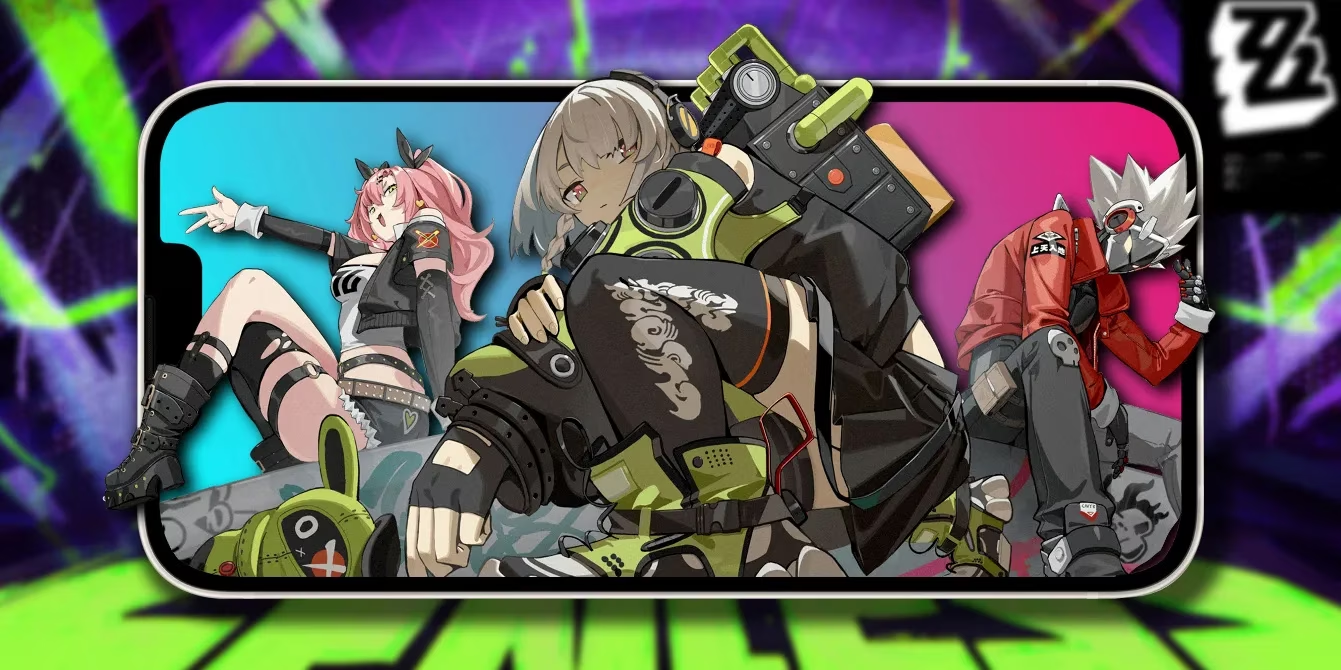
Hoyoverse's Masterclass in Algorithmic Annoyance
Let's talk about Hoyoverse. Oh, Hoyoverse. The masters of the craft. In 2026, their strategy has been refined to a brutal, efficient science. They know EXACTLY what they're doing. To the uninitiated, games like Zenless Zone Zero or Honkai Star Rail Reloaded (the 2026 expansion, of course) are celebrated for their combat, their stunning worlds, their symphonic scores. But peel back that glossy veneer, and what are they at their core? They are glorified, hyper-polished anime slot machines. Every quest you complete, every daily login you check, every piece of lore you uncover—it all funnels into one purpose: earning that precious currency for one… more… pull. The thrill isn't in the journey; it's in the fleeting, dopamine-fueled explosion of light and sound when the virtual dice roll in your favor. And Hoyoverse's TikTok ads in 2026 are the perfect, unfiltered reflection of this core philosophy.
The Anatomy of a 2026 Scam-Ad™
Not a single one of these advertisements bothers to tell you what the game is about. Narrative? World-building? Gameplay mechanics? Please. That's for suckers who read video game reviews. The modern ad script is a masterpiece of minimalist deception. It goes like this:
-
The Hook (0-1 second): A wildly popular audio snippet from a trending meme or song that has absolutely nothing to do with the game. A cat dancing. A viral cooking fail sound.
-
The "Talent" (1-3 seconds): An actor who displays the emotional range of a teaspoon reads directly from a teleprompter. Their eyes scream for help. Their voice is a monotone recitation of buzzwords.
-
The Promise (3-6 seconds): "FREE 100 PULLS ON NEW BANNER!" "SECRET CODE FOR SSR CHARACTER!" "DON'T MISS LIMITED REWARDS!" The text flashes in garish, seizure-inducing fonts. The actor gestures wildly at a phone screen showing a gacha animation.
-
The Call to Action (6-10 seconds): "LINK IN BIO!" "DOWNLOAD BEFORE EVENT ENDS!" The video loops, or cuts to another equally jarring clip.
That's it. That's the entire playbook. It treats the viewer—it treats me—with such breathtaking contempt. It assumes my attention span is measured in nanoseconds and my intelligence is on par with a concussed pigeon. The message is clear: You are not a player to be engaged; you are a wallet to be primed.
The Great Descent: When AAA Went F2P Crazy
What truly depresses me in 2026 is the normalization of this tactic. It's not just the obvious suspects anymore. Remember when this was the exclusive domain of "Merge Dragon Elf Empire: Puzzle Saga" clones? Those days are a distant memory. Over the last year, I've seen this exact same, cookie-cutter ad format used to hawk:
-
Honkai Star Rail: The Penacony Paradox (The big 2025 story expansion)
-
Wuthering Waves: Echoes of the Abyss (Their 2026 major update)
-
AFK Journey's "Realm of Champions" crossover event
-
Countless others that blur into a migraine-inducing haze of bright colors and fake excitement.
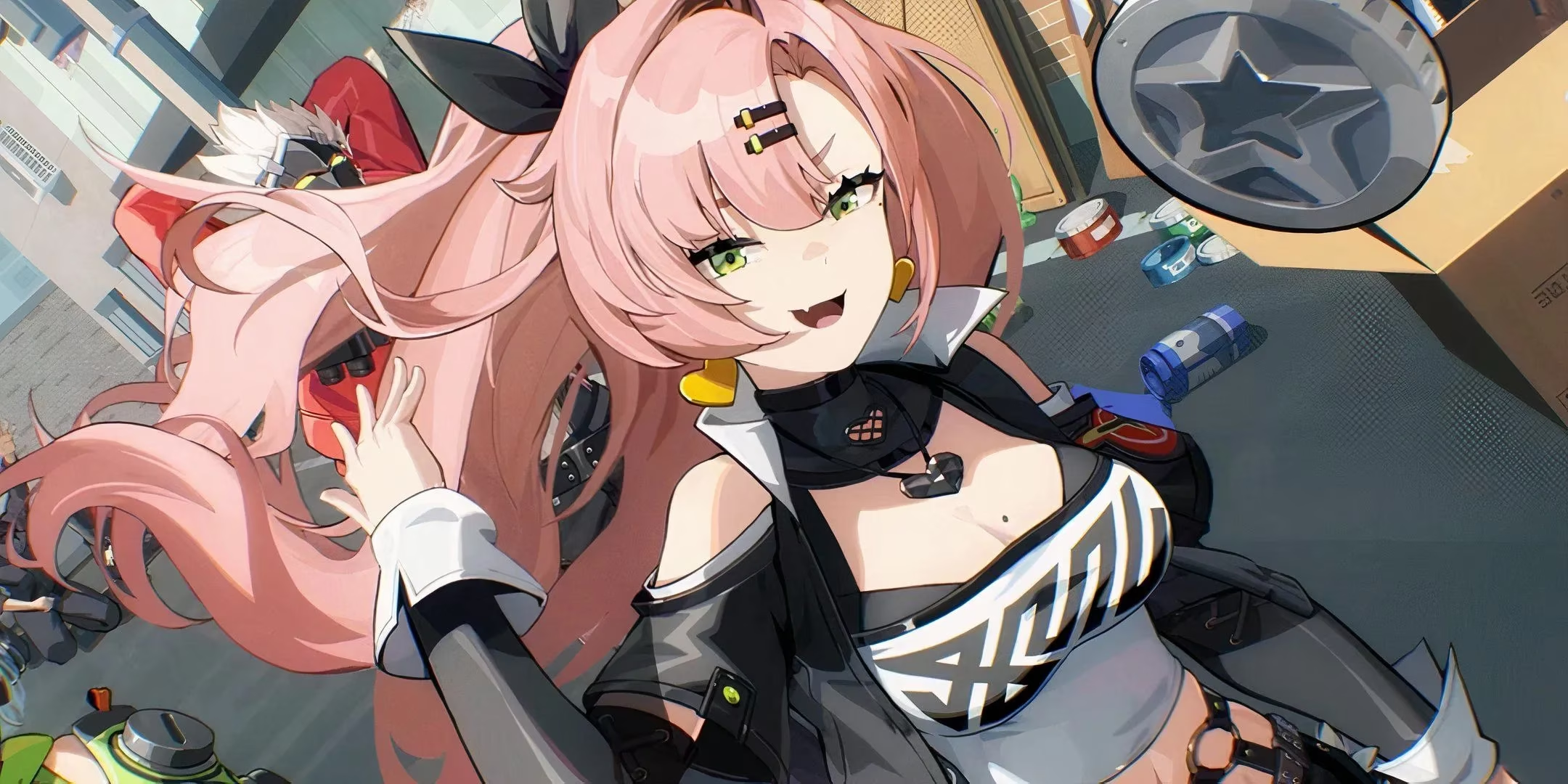
This is the part that breaks my heart. These games have characters like Nicole Demara—cool, well-designed, with hinted-at depths and stories. But in the ad sphere, she's reduced to a shiny collectible, a JPEG to be won, her narrative significance stripped away for a quick thumbnail click. The incredible art, the composed music, the effort of hundreds of developers—all of it becomes background noise to the siren song of FREE STUFF.
Can you imagine if other genres did this? The cognitive dissonance is staggering.
| Game That Would Never Do This | Hypothetical 2026 TikTok Ad Script |
|---|---|
| The Last of Us Part III | "OMG! FREE FEDRA SUPPLY CRATE WITH CODE 'JOEL'! GET ELLIE'S NEW KNIFE SKIN BEFORE THE BLOATER EVENT ENDS! #FactionsMP #ad" |
| Baldur's Gate 4: The Second Sundering | "SECRET TAVERN CODE UNLOCKS LEGENDARY SWORD + 5000 GOLD! TAP LINK TO ROLL FOR CRITICAL HIT LOOT! #BG4 #DnD #ad" |
| Elden Ring: Shadow of the Erdtree (Legacy DLC) | "MALENIA'S GREAT RUNE GLITCH! GET INFINITE RUNES BEFORE PATCH! LIKE AND SUBSCRIBE! #EldenRing #ad" |
It would be a joke! A pathetic, embarrassing joke. Yet, for free-to-play mobile-inspired games, this is the standard. It's accepted. It's expected. It speaks to a terrifying adaptation where games mold themselves to the platform's worst instincts: the need for instant gratification, the endless scroll, the quick hit. TikTok is a dopamine delivery system, and these games have perfectly positioned themselves as the premium suppliers.
The Uncomfortable Truth: It Works. Oh God, It Works.
And here's the bitter pill I have to swallow: this strategy is terrifyingly effective. The math is simple and cruel. These ads are cheap to produce. Dirt cheap. You can film a hundred variations in an afternoon. Then, you unleash them upon the algorithmic hive mind of TikTok. You don't need to convince everyone. You just need to hook the vulnerable, the curious, the bored.
If one out of every hundred thousand viewers who sees this drivel thinks, "Huh, free stuff…" and taps the link, that's a victory. They download the game. They get their ten free pulls. Maybe they get a shiny new character. The onboarding hooks sink in. The daily login rewards start. The battle pass glitters enticingly. Suddenly, they're in the ecosystem. Mission accomplished for Hoyoverse. A player is born from a seed of spam.

This is what makes me so conflicted. Part of me wants to dive into Zenless Zone Zero. The world looks vibrant! Characters like Zhu Yuan seem incredibly stylish! The combat clips are flashy! But every time that interest sparks, my TikTok feed douses it with the cold water of a dozen scam-ads. It actively pushes me away. It tells me, before I've even pressed install, that this experience isn't about respecting my time or intelligence. It's about grinding, spending, and feeding the slot machine. In 2026, my time is the most valuable currency I have. Why would I invest it in something that so blatantly announces its intention to waste it?
The tragedy is that these games are often so much more than their worst advertisements. But by embracing the lowest common denominator of marketing, they become synonymous with it. They signal to the world that they are products first, games second. And as I scroll past another actor feigning shock at a virtual pull, I can't help but feel a little sad for the art that's buried beneath all that cynical noise. The circus is in town, and it's playing on a loop right in the palm of my hand. I think it's time I put my phone down.