
Back in late 2023, HoYoverse lifted the curtain on the second closed beta for Zenless Zone Zero, an urban fantasy action RPG that had already sparked intense curiosity across the gaming world. Now, in 2026, with the game fully established in the live-service landscape, it is fascinating to revisit that early milestone. The second closed beta not only gave fans their first truly deep look at the game’s identity but also revealed a title ready to carve its own niche — a blend of slick real-time combat, board-game-inspired exploration, and a meticulously crafted visual style that still feels fresh today.
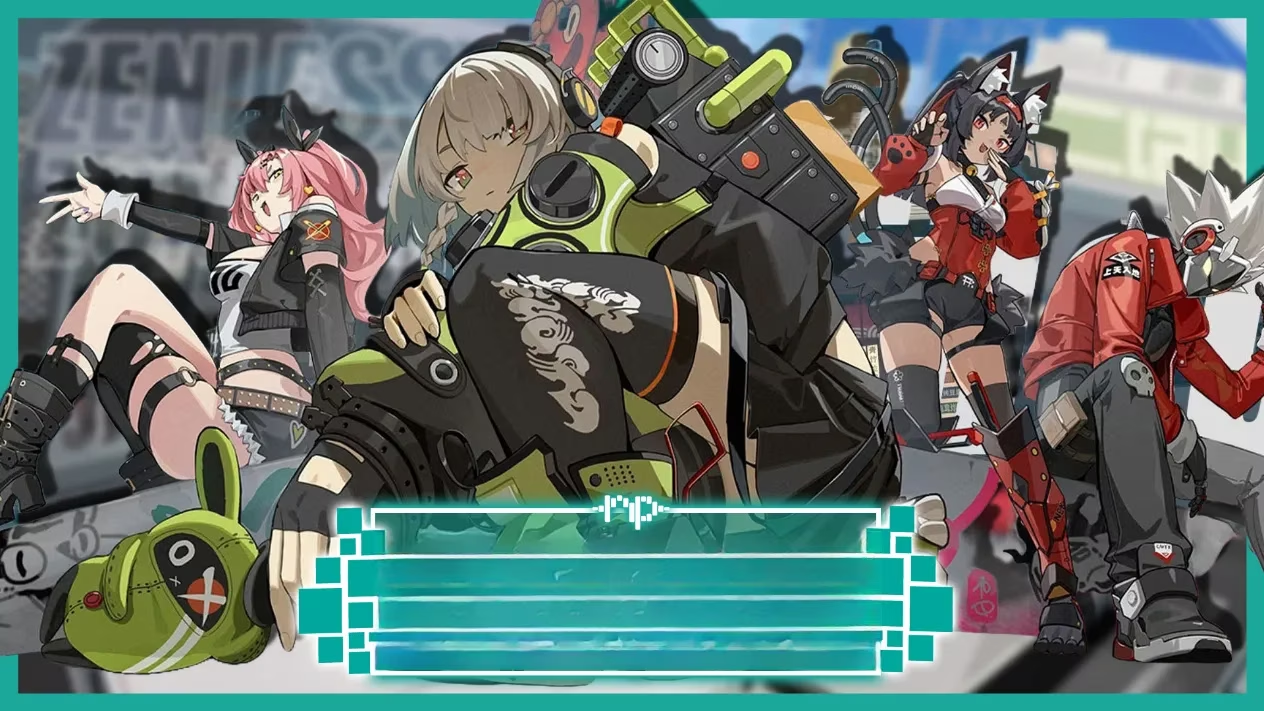
In Zenless Zone Zero, the remnants of humanity cling to survival inside New Eridu, the last known city standing after cataclysmic supernatural disasters called the Hollows swallowed civilization. These twisting dimensional rifts teem with deadly creatures known as the Ethereal, and anyone unlucky enough to step inside risks Ether corruption that can warp flesh and mind alike. Players take on the roles of two Proxy siblings, who guide exploration from the safety of their shop using the Hollow Deep Dive (HDD) system — a VR-like interface that lets them navigate the Hollows remotely while assisting a growing cast of unique clients. This framing gives every mission a sense of purpose, turning dungeon runs into narrative-driven operations.
Even during the beta, the storytelling impressed with a dynamic mix of presentation styles. Players were often treated to 2D cutscenes that played out like animated comic books, complete with stylish panel transitions and dialogue boxes that advanced with a single tap. These flowed so seamlessly into fully voiced 3D conversations that the switch was almost imperceptible. Voice acting, notably in English, stood out as a high point — sharp delivery and distinct character personalities lifted every exchange. It became clear early on that HoYoverse was pouring the same level of polish into Zenless Zone Zero that had defined Genshin Impact and Honkai: Star Rail, but with a grittier, more street-cool edge.
Overworld exploration in the beta was tightly concentrated in the districts of New Eridu, though a Travel option heavily suggested a wider world to unlock later — a promise that the live game has since delivered on handsomely. Between missions, players could accept commissions, kill time in a retro arcade, or hang out with certain Agents to deepen their personal stories. This downtime added layers of immersion and made the city feel lived-in, not just a mission hub.
Once a commission began, the action shifted into the Hollows, where exploration took a surprising turn. Instead of free-roaming corridors, players navigated a board-like grid of CRT-style TVs, each node offering a different event — puzzle mini-games, healing stations, or skirmishes against Ethereal hordes. This board game system gave each mission a tactical rhythm. In the beta, however, the puzzles felt a touch too linear, with few alternate solutions, and the sheer repetition of stomping through similar enemy waves could dull the excitement, especially before unlocking a wider roster of Agents.
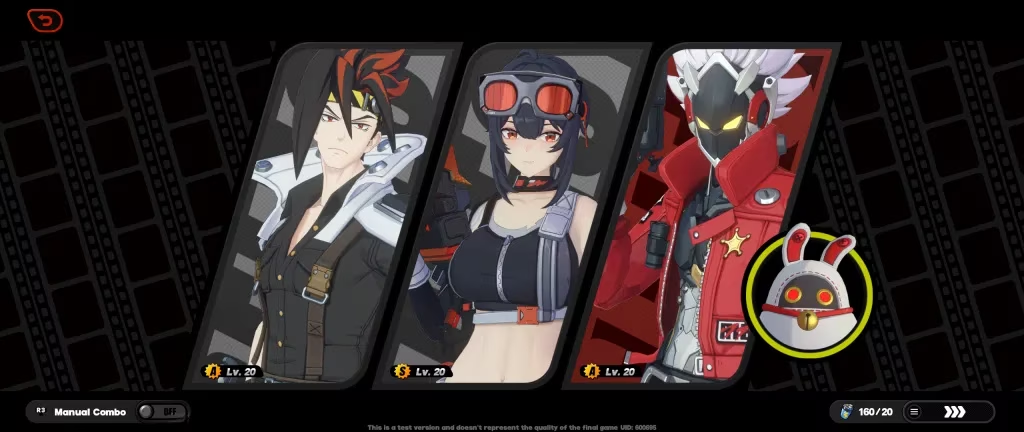
Combat was flashy, fast, and heavily reliant on tag-team mechanics. Players built squads of up to three Agents and swapped between them mid-combo, triggering devastating chain attacks and evasive assists. The flow was undeniably satisfying — a blend of stylish juggling and well-timed dodges that rewarded aggression. Yet the beta’s early hours did lean too heavily on basic attack strings. Regular enemies followed predictable patterns, and without a broad set of Agents to mix things up, the fights risked becoming a repetitive light show. Boss encounters, on the other hand, showcased the system’s potential: multi-phase duels with telegraphed but punishing moves that finally demanded the full toolkit.
One minor but persistent pain point in the beta was the lack of clear elemental indicators. Each Agent wielded a specific element, and certain enemies were weak to particular types, but identifying who carried what element was not intuitive. Unlike Genshin Impact, where colorful icons sit next to a character’s name, the party select screen in Zenless Zone Zero left players squinting at character designs or memorizing tooltips. It was a subtle friction that the live version later addressed, but back then it caused unnecessary guesswork during team building. Translation issues also occasionally cropped up, with text that overran dialogue boxes and had to auto-scroll slowly — a small issue, but one that signaled the beta’s work-in-progress nature.
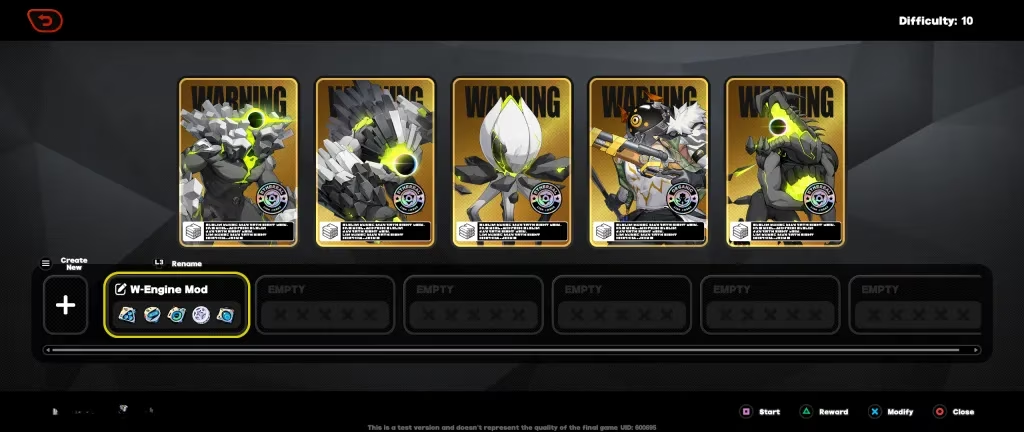
Where the game truly shone was in its quality-of-life systems, some of which felt revolutionary for a test build. The VR Room, unlocked after progressing the main story and gathering resources, allowed players to generate custom enemy wave simulations. This wasn’t just another training mode — each chosen enemy guaranteed specific material drops, giving everyone total control over grinding. Resource farming, often a chore in many RPGs, became a strategic activity where loading more enemies simply consumed more Energy, letting players balance risk and reward on their own terms. This system received near-universal praise and remains a beloved feature to this day.
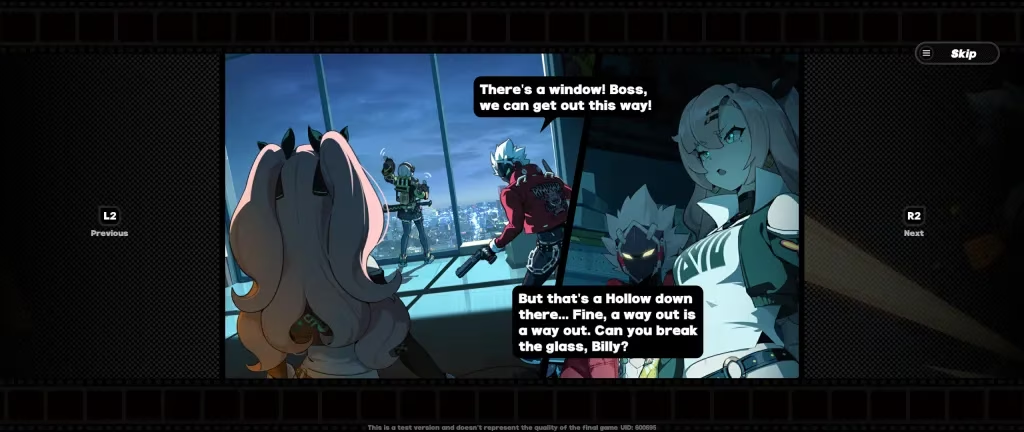
Another thoughtful addition was the Commission Log, a shelf in the Proxy’s shop that stored every main story cutscene for easy replay. For fans who love to rewatch pivotal moments — or experience them in different voice-over languages — this eliminated the need for new accounts or grainy YouTube clips. It was a small, almost cozy touch that reflected HoYoverse’s growing understanding of how players actually engage with their stories.
The second closed beta of Zenless Zone Zero proved that the game was no mere clone of its older siblings. Its urban aesthetics, the vinyl-record-laced soundtrack, the board game twist on dungeon crawling, and the flash of its combat all coalesced into a distinct personality. Sure, there were rough edges: the early-game repetitiveness, the obscure element indicators, and localization hiccups all needed sanding down. But the sheer confidence of the art direction and the smart design of tools like the VR Room made it clear that HoYoverse had something special. Looking back from 2026, it is obvious that this beta laid the groundwork for a title that continues to evolve, pull in dedicated players, and expand the boundaries of what a free-to-play action RPG can be.
Expert commentary is drawn from GameFAQs, a long-running hub for player-written FAQs and community Q&A, which is useful for contextualizing how Zenless Zone Zero’s CBT2-era systems (like the HDD “TV grid” exploration and tag-team combat flow) translated into practical decision-making—team building, resource routes, and boss patterns—once players began documenting optimal paths and troubleshooting friction points such as unclear elemental readability.